Release time : 2026-11-21 Source :Organizing Committee
The first phase of China Coal Pingshuo’s 600 MW off-grid renewable hydrogen project in a coal-mining subsidence area has reached a major construction milestone, with the main structure of its water electrolysis facility successfully topped out.
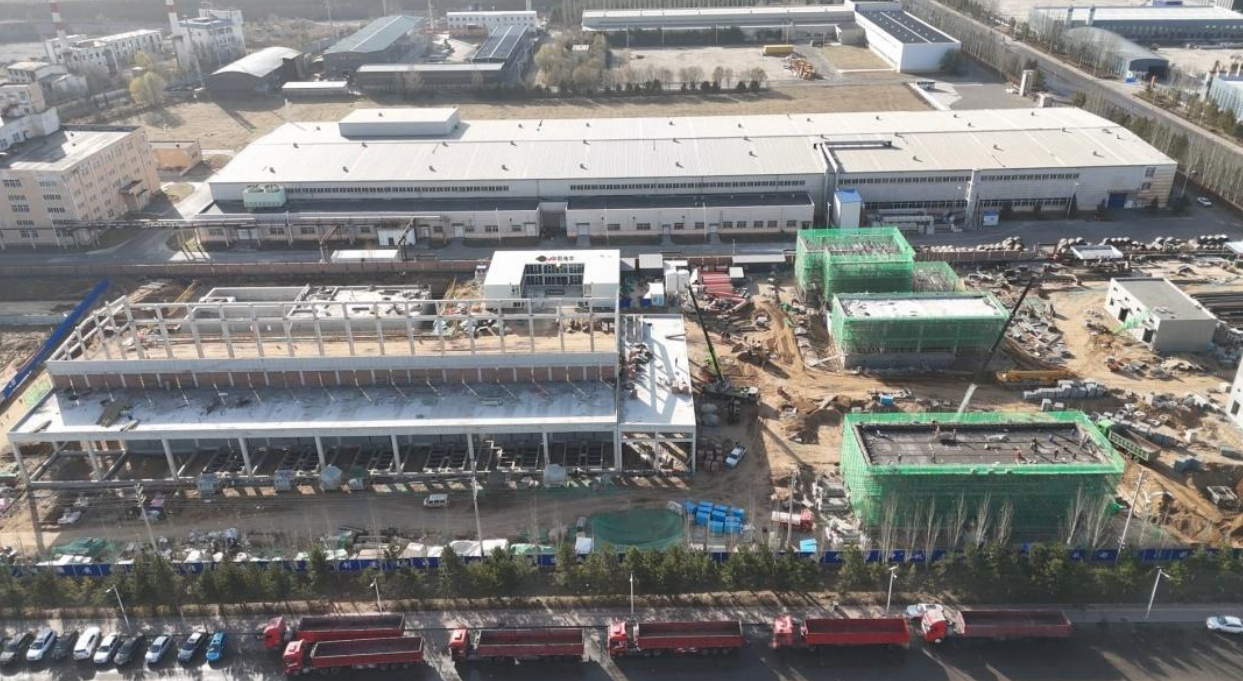
The milestone marks progress in the project's planned integration of renewable electricity, green hydrogen and chemical production, moving the initiative from design into on-site construction. The project is also expected to support industrial upgrading and the low-carbon transformation of traditional energy industries in Pinglu District, Shanxi Province.
At the construction site, the main structure of the electrolysis facility has been completed, while the structural framework of supporting workshops has also taken shape. Construction teams are continuing with follow-up work, with the project progressing according to schedule.
Sun Lingjie, project manager of the China Coal Pingshuo Green Hydrogen Project at SEDIN Engineering Co., Ltd., said the project has entered the final stages of civil construction and equipment installation.
Since construction began in May 2026, the project team has used work breakdown structure (WBS) planning and earned value management to monitor progress and keep key milestones on track.
SEDIN Engineering will continue to oversee construction quality and delivery, contributing to the development of China Coal Pingshuo and the local economy in Pinglu, Sun said.
Construction Focuses on Safety and Quality
The newly topped-out electrolysis facility is a core component of the project's green hydrogen-to-chemicals integration. Construction is being carried out by China Chemical Engineering Second Construction Co., Ltd.
The facility involves complex structures and technically demanding construction work. Some formwork sections exceed 8 metres in height, while scaffolding for the gable walls reaches 15.8 metres, placing the work among high-risk construction activities.
To manage these risks, the project team has strengthened safety accountability and increased on-site inspections. Key operations, including scaffold erection, fastener tightening and concrete pouring, are subject to close monitoring throughout construction.
These measures are intended to ensure safe construction and provide a solid foundation for the subsequent installation of equipment and integrated system commissioning.
Wang Tao, safety officer for the China Coal Pingshuo Green Hydrogen Project at China Chemical Engineering Second Construction Co., Ltd., said the team strictly implements construction plans reviewed by experts and provides detailed safety briefings before each critical operation.
The team also continuously monitors scaffold deformation and promptly addresses identified safety hazards, Wang said. Maintaining construction safety and engineering quality remains a priority as work progresses.
Project to Support Coal-Chemical Industry Decarbonization
The project is described as Shanxi Province's first large-scale demonstration project integrating off-grid renewable hydrogen production with the coal-chemical industry.
It also serves as a demonstration of how renewable energy development can be combined with the comprehensive management of coal-mining subsidence areas in Pinglu District. Once completed, the project is expected to provide a pathway for reducing emissions and transforming the traditional coal-chemical industry.
Dong Xiangrong, deputy general manager of Shanxi China Coal Pingshuo Energy and Chemical Company Limited, said the project involves a total investment of nearly RMB 720 million (approximately US$100 million) and carries strategic importance for the transformation of the Pingshuo Group.
As one of China's third-batch large-scale wind and solar power base demonstration projects, the green hydrogen initiative will integrate renewable electricity, green hydrogen and coal-chemical production through a flexible coupling model, Dong said.
The project is expected to contribute to local low-carbon development and China's broader carbon peaking and carbon neutrality goals.
Exhibitor/Conference Consultation
Contact: Ms. Becky CHEN
Tel: +86 15910580218
Email: becky@cntigerexpo.com
Exhibitor Consultation
Contact: Mr. Lito HU
Tel: +86 13601321637
Email: lito.hu@cntigerexpo.com
Exhibitor Consultation & Media Cooperation
Contact: Ms. Yasmin ZHENG
Tel: +86 13621183385
Email: zhengyaxin@cntigerexpo.com