Release time : 2026-07-10 Source :FuelcellChina
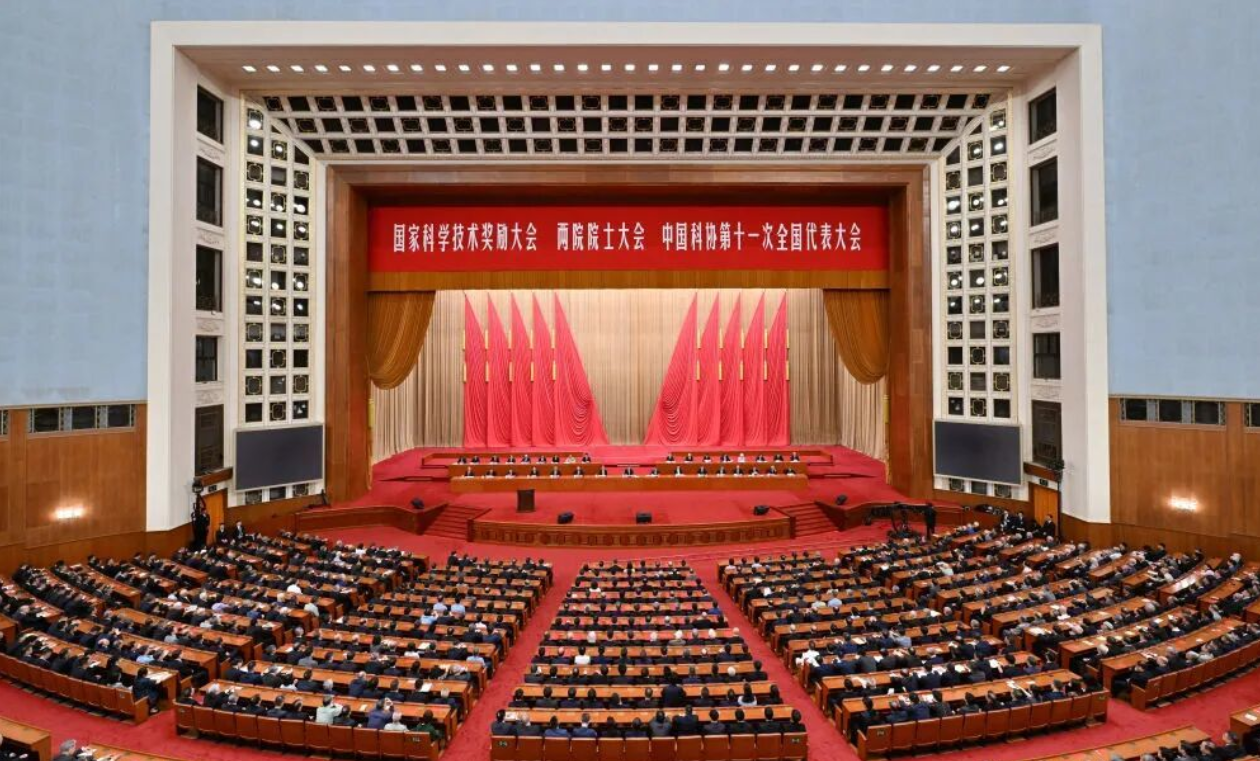
China announced the winners of the 2025 National Science and Technology Awards on July 8, honoring 258 research projects and 11 scientists. Three of the award-winning projects are directly related to hydrogen technologies, covering low-pressure ammonia synthesis, chlor-alkali ion exchange membranes and biomass conversion.
Large-Scale Low-Pressure Ammonia Synthesis Technology
The project received the Second Class Prize of the National Science and Technology Progress Award. Led by Professor Jiang Lilong of Fuzhou University, the project was jointly completed by the Petrochemical Research Institute of PetroChina, Beijing Haineng New Energy Technology Co., Ltd., Nanjing Dunxian Chemical Technology Co., Ltd., Shandong Hualu-Hengsheng Chemical Co., Ltd., Anhui Haoyuan Chemical Group Co., Ltd., and Nanjing Jutuo Chemical Technology Co., Ltd.
The research focused on two key stages of coal-based ammonia production—hydrogen generation through the water-gas shift reaction and ammonia synthesis. The team developed water-tolerant, high-efficiency shift catalysts together with newly designed large-scale hydrogen production reactors. It also introduced high-performance ruthenium-based ammonia synthesis catalysts and innovative large-scale synthesis reactors, creating a new catalytic process for low-pressure ammonia production.
The technology reduces synthesis pressure from 25.0 MPa to 9.5 MPa while lowering operating temperatures by approximately 90°C. Energy consumption has been reduced to 1.07 tonnes of standard coal per tonne of ammonia. The technology has been adopted by more than 150 ammonia production plants, while its hydrogen production process has also been deployed at over 40 large-scale methanol and ethylene glycol facilities.
Next-Generation Chlor-Alkali Ion Exchange Membrane Technology
This project also received the Second Class Prize of the National Science and Technology Progress Award. It was led by Professor Zhang Yongming from the School of Chemistry and Chemical Engineering at Shanghai Jiao Tong University, together with Shandong Dongyue Polymer Materials Co., Ltd., Shandong Dongyue Future Hydrogen Energy Materials Co., Ltd., Shanghai Chlor-Alkali Chemical Co., Ltd., and Shanghai REFIRE Technology Co., Ltd.
The project achieved major advances in membrane chemistry, material development, manufacturing processes, production equipment and industrial engineering. Researchers developed new methodologies for confined emulsion polymerization of perfluorinated ionomers and established molecular assembly theories for these materials. The team also developed proprietary manufacturing technologies for core membrane materials.
The resulting next-generation chlor-alkali perfluorinated ion exchange membranes offer high current density, lower power consumption and longer service life, and have already been widely adopted across China's chlor-alkali industry.
Advanced Biomass Thermal Conversion Technology
The project received the Second Class Prize of the National Science and Technology Progress Award. It was led by Professor Xiao Rui of Southeast University, with participation from Shanghai Kangheng Environmental Co., Ltd., China Everbright Environment Group Limited, Hefei Debo Bioenergy Technology Co., Ltd., China Tianying Inc., and Nanjing Institute of Technology.
The project focuses on converting biomass and organic solid waste into high-value fuels and advanced materials on an industrial scale. Researchers improved understanding of thermal free-radical reactions during biomass conversion and developed more energy-efficient processing technologies. They also designed serial circulating fluidized-bed equipment and mobile pyrolysis systems to improve biomass collection, storage and transportation.
The technology has been commercialized in systems ranging from 1,000-ton to 100,000-ton capacity. It has been deployed in more than 20 provincial-level regions across China and exported to over 20 countries. The project also led to the construction of the world's first 1,000-ton demonstration plant for biomass-based sustainable aviation fuel (SAF). Carbon materials produced through the technology are now being used as domestically manufactured alternatives for key components in energy storage batteries.
About the National Science and Technology Awards
Established in 1999, China's National Science and Technology Awards comprise five categories: the Highest Science and Technology Award, the National Natural Science Award, the National Technological Invention Award, the National Science and Technology Progress Award, and the International Science and Technology Cooperation Award.
This year's awards marked the first time that three First Class Prizes were presented under the National Natural Science Award category, highlighting China's continued emphasis on basic research and original innovation.
According to the award organizers, this year's winning projects demonstrate progress in frontier scientific research, strategic technologies and innovations aimed at addressing national priorities while improving public well-being.
Exhibitor/Conference Consultation
Contact: Ms. Becky CHEN
Tel: +86 15910580218
Email: becky@cntigerexpo.com
Exhibitor Consultation
Contact: Mr. Lito HU
Tel: +86 13601321637
Email: lito.hu@cntigerexpo.com
Exhibitor Consultation & Media Cooperation
Contact: Ms. Yasmin ZHENG
Tel: +86 13621183385
Email: zhengyaxin@cntigerexpo.com